- All products
- Media and Reagents
- Cell Dissociation Reagents
- Universal Neutralization Buffer, 50 mL
- Cell Dissociation Reagents
Internal Reference:
KM-UNB-1
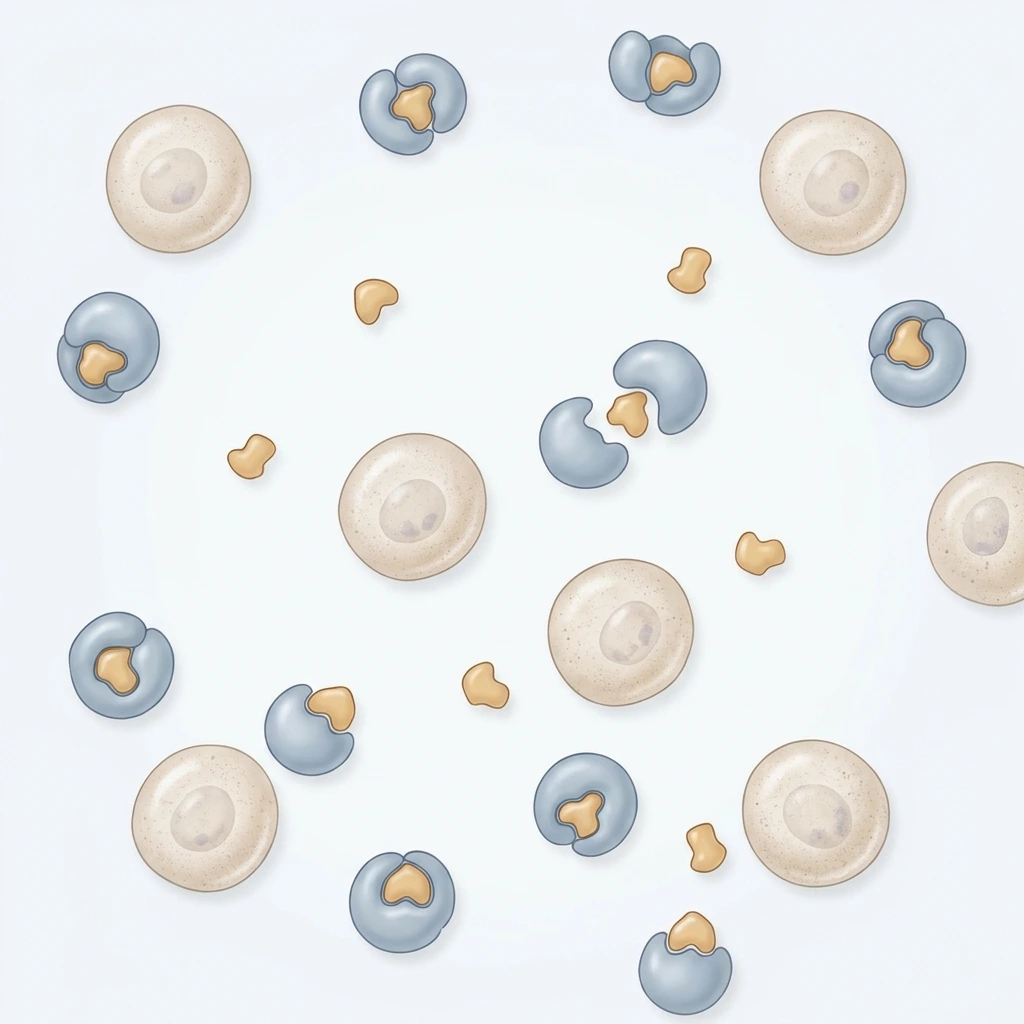
Every extra minute trypsin stays on your cells costs you viability. Universal Neutralization Buffer stops trypsin, trypsin/EDTA, and other proteolytic enzymes used for cell dissociation right after detachment, so harvested cells stay healthy for subculturing, counting, and seeding.
Add it 1:1 to standard trypsin/EDTA and it neutralizes at least 99% of trypsin activity within 2 minutes. The phosphate- and HEPES-buffered formulation keeps cells in a gentle, physiological environment while you spin, count, and seed. The neutralizing component is a recombinant protein expressed in E. coli; the full formulation is proprietary.
Recommended use: Neutralizing trypsin, trypsin/EDTA, and other proteolytic dissociation enzymes after passaging adherent cell lines and primary cells.
Applications
- Enzyme neutralization after cell dissociation
- Single-cell suspensions for subculturing
- Cell counting
- Seeding and downstream assays
Specifications
| Catalog Number | KM-UNB-1 |
| Format | 50 mL, liquid (bottle) |
| Product Type | Enzyme neutralization buffer (cell culture reagent) |
| Formulation | Proprietary phosphate- and HEPES-buffered saline formulation with a recombinant neutralizing protein expressed in E. coli |
| pH | 7.2 to 7.4 |
| Osmolality | 280 to 320 mOsm/kg |
| Sterility | Sterile-filtered (0.22 µm) |
| Neutralization Efficacy | Neutralizes ≥ 99% of trypsin activity within 2 minutes |
| Working Ratio | 1:1 with standard trypsin/EDTA (0.05% or 0.25%). Higher enzyme concentrations or specialized dissociation reagents may need proportionally more buffer. |
| Regulatory Status | For Research Use Only |
Protocol
Use an equal volume of buffer to the trypsin/EDTA you added. Example: 5 mL buffer to 5 mL trypsin/EDTA.
- 1Add buffer. Once cells have detached, add an equal volume of Universal Neutralization Buffer.
- 2Mix. Pipette gently or swirl to mix thoroughly.
- 3Transfer. Move the cell suspension to a sterile centrifuge tube.
- 4Centrifuge. Spin at 200 to 300 × g for 5 minutes at room temperature.
- 5Aspirate. Remove the supernatant without disturbing the pellet.
- 6Resuspend. Resuspend in fresh culture medium and continue with your protocol.
Quality Control
Every lot is tested before release:
- Sterility: no growth after 14 days
- Mycoplasma: negative
- Endotoxin: ≤ 0.5 EU/mL
- pH and osmolality verified against specification
- Neutralization efficacy: ≥ 99% of trypsin activity within 2 minutes
Lot-specific results are on the Certificate of Analysis. Email us to request the CoA and include your lot number from the bottle or vial label.
Storage & Shipping
| Shipping Condition | Refrigerated, 2°C to 8°C |
| Storage Temperature | 2°C to 8°C upon arrival |
| Stability | 12 months from the date of manufacture when stored as directed. |
| If Precipitate Forms | Warm to room temperature and swirl gently to dissolve before use. Contact us if it does not clear. |
| Do Not | Do not use a bottle that has frozen in transit. |
| Important | Do not freeze. |
Safety
Regulatory
For Research Use Only. Not for use in diagnostic, therapeutic, or clinical procedures. Not for human or animal consumption.
Frequently Asked Questions
What ratio do I use?
1:1 with standard 0.05% or 0.25% trypsin/EDTA. Higher enzyme concentrations or specialized dissociation reagents may need proportionally more buffer.
Does it work with enzymes other than trypsin?
Yes. It is formulated to neutralize trypsin, trypsin/EDTA, and other proteolytic enzymes used for cell dissociation. Specialized reagents may need proportionally more buffer.
What is in it?
A phosphate- and HEPES-buffered saline with a recombinant neutralizing protein expressed in E. coli. The exact formulation is proprietary.
I see precipitate in the bottle.
Warm it to room temperature and swirl gently. If it does not clear, contact us before use.
My bottle froze in shipping.
Do not use it. Contact us and we will make it right.
Do I still need to centrifuge?
Yes. Neutralize, spin at 200 to 300 × g for 5 minutes, and resuspend in fresh medium.
Still have a question? Ask the bench. A real cell culture scientist answers.
Frequently Bought Together
These other products might interest you