- All products
- Cell Lines
- Astrocytes
- Human Brain Astrocyte
- Astrocytes
Internal Reference:
KCL-AST-101
⚠ FOR RESEARCH USE ONLY — Not for diagnostic or therapeutic procedures
KCL-AST-101 is a primary human astrocyte cell line isolated from normal human brain cortical tissue. Astrocytes are the most abundant glial cell type in the central nervous system, where they regulate neuronal metabolism, modulate synaptic transmission, contribute to blood–brain barrier integrity, and respond to injury through reactive astrogliosis.
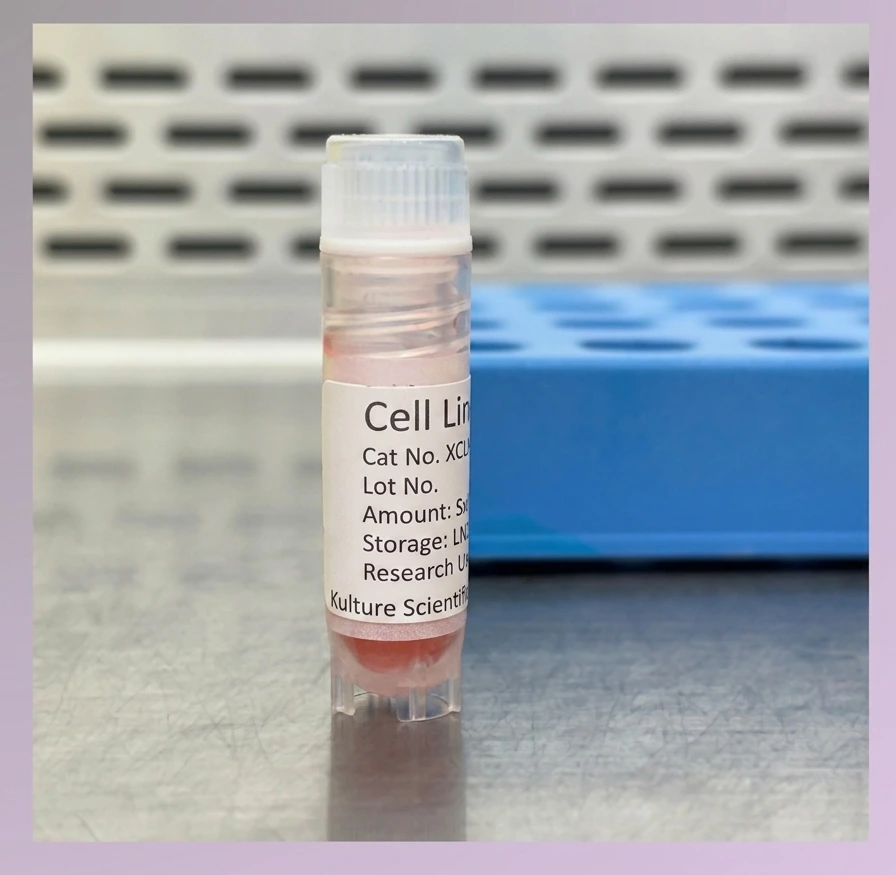
Cells are provided at Passage 1 in cryopreserved vials. Cultured following the recommended protocol, this lot has a minimum average population doubling level greater than 10, supporting multiple downstream passages for extended studies. Cytoplasmic GFAP positivity is confirmed at greater than 98% by immunofluorescence, verifying astrocyte lineage identity.
This line is well suited to neuroinflammation studies, blood–brain barrier modeling, and co-culture systems with neurons, endothelial cells, or pericytes. All lots are quality tested prior to release for GFAP positivity, viability, and pathogen screening.
Astrocytes Growth Medium (AGM), which contains FBS and growth factor supplements formulated specifically for astrocyte expansion. To prepare quiescent cells for stimulation assays, replace AGM with a basal medium containing 0.5% FBS for 8–12 hours prior to the experiment.
All lots are quality tested prior to release.
| Parameter | Result | Specification |
|---|---|---|
| Cytoplasmic GFAP | ✓ Positive | >98% by immunofluorescence |
| Population doubling level | ✓ Confirmed | Minimum average >10 doublings in recommended medium |
| Post-thaw viability | ✓ Pass | >70% at time of shipment |
| Passage number at freeze | ✓ Confirmed | Passage 1 |
| Tissue source | ✓ Confirmed | Normal human brain cortical tissue; adherent morphology |
| Test | Result |
|---|---|
| HIV-1 | ✗ Negative |
| HBV | ✗ Negative |
| HCV | ✗ Negative |
| Mycoplasma | ✗ Negative |
Certificates of Analysis with lot-specific QC data including GFAP immunofluorescence imaging are available upon request. Contact Kulture Scientific with your lot number.
KCL-AST-101 is shipped as a cryopreserved vial on dry ice. These are adherent cells — follow the steps below upon receipt.
To passage, rinse the flask twice with 5 mL HBSS at room temperature, then add 2 mL Universal Detachment Solution and aspirate excess within 20 seconds. Leave at room temperature or 37°C for 1 minute until cells round up and detach, then add 5 mL Universal Neutralization Buffer and centrifuge at 800 × g for 5 minutes. Resuspend the pellet in 10–15 mL fresh medium and transfer into 2–3 pre-coated T25 flasks (1:2 to 1:3 split ratio). Change medium every 2–3 days; cells typically reach confluence within 7 days at a 1:3 split.
KCL-AST-101 is available as a cryopreserved vial containing at least 5×10⁵ viable cells in cryoprotective medium.
| Product | Cat. No. | Format | Cell Number |
|---|---|---|---|
| Human Brain Astrocyte | KCL-AST-101 | Cryopreserved Vial | ≥5×10⁵ cells/vial |
- Storage — store in liquid nitrogen vapor phase (−150°C to −196°C); this is the only recommended storage condition for cryopreserved cells
- Do not store at −80°C or −20°C — neither temperature is suitable for long-term cell storage; ice crystal formation at these temperatures will irreversibly damage cell membranes and compromise viability
- Temperature sensitivity — minimize time outside cryogenic storage; cells are sensitive to temperature fluctuations
- Freeze-thaw cycles — repeated freeze-thaw cycles compromise viability and downstream performance; thaw only the quantity needed for immediate use
- Stability — cells stored in liquid nitrogen are stable until the expiry date stated on the vial label when maintained under correct cryogenic conditions
- Shipping condition — cryopreserved vials are shipped on dry ice; inspect packaging upon receipt and transfer to liquid nitrogen storage immediately
- DMSO content — cryoprotective medium contains DMSO; wear nitrile gloves during thaw procedures and avoid skin contact
- Certificate of Analysis — lot-specific QC documentation including GFAP immunofluorescence data available upon request
For research purposes only. Not for use in diagnostic or therapeutic procedures. This product has not been tested or validated for clinical use. Not for direct administration into humans or animals.
This cell line is classified as Biosafety Level 1 (BSL-1). KCL-AST-101 is a primary, unmodified human cell line with no lentiviral transduction or oncogene immortalization. Standard BSL-1 containment is appropriate for routine culture of this line.
As with any primary human-derived material, screening for common bloodborne pathogens (HIV-1, HBV, HCV) does not eliminate all risk. Handle as potentially biohazardous regardless of donor screening results, and confirm biosafety classification with your institutional biosafety committee (IBC) prior to use.
- Human-derived material — dispose of all cell culture waste, including used media and plasticware, as biohazardous material in accordance with institutional guidelines
- DMSO (cryoprotectant) — skin-penetrating solvent; wear nitrile gloves at all times during thawing
- Universal Precautions — handle all human-derived biological materials using standard Universal Precautions regardless of pathogen screening results
⚠ FOR RESEARCH USE ONLY — Not for diagnostic or therapeutic procedures
KCL-AST-101 is a primary human astrocyte cell line isolated from normal human brain cortical tissue. Astrocytes are the most abundant glial cell type in the central nervous system, where they regulate neuronal metabolism, modulate synaptic transmission, contribute to blood–brain barrier integrity, and respond to injury through reactive astrogliosis.
Cells are provided at Passage 1 in cryopreserved vials. Cultured following the recommended protocol, this lot has a minimum average population doubling level greater than 10, supporting multiple downstream passages for extended studies. Cytoplasmic GFAP positivity is confirmed at greater than 98% by immunofluorescence, verifying astrocyte lineage identity.
This line is well suited to neuroinflammation studies, blood–brain barrier modeling, and co-culture systems with neurons, endothelial cells, or pericytes. All lots are quality tested prior to release for GFAP positivity, viability, and pathogen screening.
Astrocytes Growth Medium (AGM), which contains FBS and growth factor supplements formulated specifically for astrocyte expansion. To prepare quiescent cells for stimulation assays, replace AGM with a basal medium containing 0.5% FBS for 8–12 hours prior to the experiment.
All lots are quality tested prior to release.
| Parameter | Result | Specification |
|---|---|---|
| Cytoplasmic GFAP | ✓ Positive | >98% by immunofluorescence |
| Population doubling level | ✓ Confirmed | Minimum average >10 doublings in recommended medium |
| Post-thaw viability | ✓ Pass | >70% at time of shipment |
| Passage number at freeze | ✓ Confirmed | Passage 1 |
| Tissue source | ✓ Confirmed | Normal human brain cortical tissue; adherent morphology |
| Test | Result |
|---|---|
| HIV-1 | ✗ Negative |
| HBV | ✗ Negative |
| HCV | ✗ Negative |
| Mycoplasma | ✗ Negative |
Certificates of Analysis with lot-specific QC data including GFAP immunofluorescence imaging are available upon request. Contact Kulture Scientific with your lot number.
KCL-AST-101 is shipped as a cryopreserved vial on dry ice. These are adherent cells — follow the steps below upon receipt.
To passage, rinse the flask twice with 5 mL HBSS at room temperature, then add 2 mL Universal Detachment Solution and aspirate excess within 20 seconds. Leave at room temperature or 37°C for 1 minute until cells round up and detach, then add 5 mL Universal Neutralization Buffer and centrifuge at 800 × g for 5 minutes. Resuspend the pellet in 10–15 mL fresh medium and transfer into 2–3 pre-coated T25 flasks (1:2 to 1:3 split ratio). Change medium every 2–3 days; cells typically reach confluence within 7 days at a 1:3 split.
KCL-AST-101 is available as a cryopreserved vial containing at least 5×10⁵ viable cells in cryoprotective medium.
| Product | Cat. No. | Format | Cell Number |
|---|---|---|---|
| Human Brain Astrocyte | KCL-AST-101 | Cryopreserved Vial | ≥5×10⁵ cells/vial |
- Storage — store in liquid nitrogen vapor phase (−150°C to −196°C); this is the only recommended storage condition for cryopreserved cells
- Do not store at −80°C or −20°C — neither temperature is suitable for long-term cell storage; ice crystal formation at these temperatures will irreversibly damage cell membranes and compromise viability
- Temperature sensitivity — minimize time outside cryogenic storage; cells are sensitive to temperature fluctuations
- Freeze-thaw cycles — repeated freeze-thaw cycles compromise viability and downstream performance; thaw only the quantity needed for immediate use
- Stability — cells stored in liquid nitrogen are stable until the expiry date stated on the vial label when maintained under correct cryogenic conditions
- Shipping condition — cryopreserved vials are shipped on dry ice; inspect packaging upon receipt and transfer to liquid nitrogen storage immediately
- DMSO content — cryoprotective medium contains DMSO; wear nitrile gloves during thaw procedures and avoid skin contact
- Certificate of Analysis — lot-specific QC documentation including GFAP immunofluorescence data available upon request
For research purposes only. Not for use in diagnostic or therapeutic procedures. This product has not been tested or validated for clinical use. Not for direct administration into humans or animals.
This cell line is classified as Biosafety Level 1 (BSL-1). KCL-AST-101 is a primary, unmodified human cell line with no lentiviral transduction or oncogene immortalization. Standard BSL-1 containment is appropriate for routine culture of this line.
As with any primary human-derived material, screening for common bloodborne pathogens (HIV-1, HBV, HCV) does not eliminate all risk. Handle as potentially biohazardous regardless of donor screening results, and confirm biosafety classification with your institutional biosafety committee (IBC) prior to use.
- Human-derived material — dispose of all cell culture waste, including used media and plasticware, as biohazardous material in accordance with institutional guidelines
- DMSO (cryoprotectant) — skin-penetrating solvent; wear nitrile gloves at all times during thawing
- Universal Precautions — handle all human-derived biological materials using standard Universal Precautions regardless of pathogen screening results
Frequently Bought Together
These other products might interest you