- All products
- Cell Lines
- CHO-K1 / CD19 & GFP Expression Stable Cell Line
- Cell Lines
Internal Reference:
KCL-ENG-201
⚠ FOR RESEARCH USE ONLY — Not for diagnostic or therapeutic procedures
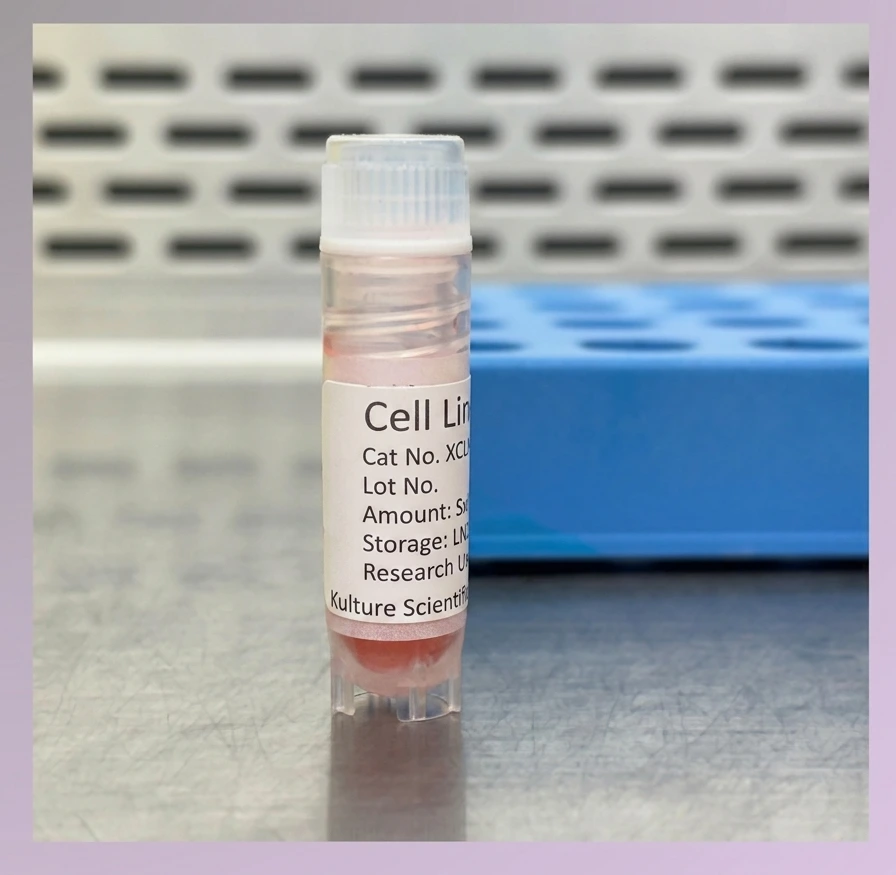
KCL-ENG-201 is a genetically engineered CHO-K1 (Chinese Hamster Ovary) cell line that constitutively and stably co-expresses full-length human CD19 and Green Fluorescent Protein (GFP). The dual-expression system uses a bicistronic or separate promoter design to ensure high, coordinated expression of both transgenes from a single stably integrated construct.
Greater than 90% of cells co-express CD19 and GFP through passage 15 as verified by flow cytometry, with CD19 expression confirmed at greater than 95% positive (MFI at least 1.5-fold over isotype control) and GFP fluorescence confirmed at greater than 95% positive (Ex/Em 488/510 nm). The CHO-K1 background is non-human in origin, providing a clean, low-background host for CD19 display without endogenous human surface markers that could confound assay readouts.
This line is particularly well suited to fluorescence-based CAR-T cytotoxicity assays, where GFP enables real-time or endpoint target cell quantification without the need for additional labeling. All lots are quality tested prior to release for co-expression, viability, mycoplasma, and sterility.
Ham's F-12K supplemented with 10% heat-inactivated FBS and 1% Pen/Strep. For long-term maintenance of stable expression, selection antibiotic may be applied for the first 2 passages after thaw (Puromycin at 5 μg/mL or Neomycin as appropriate — confirm selection marker with Certificate of Analysis for your lot). Subculture at 80 to 90% confluence using 0.25% Trypsin-EDTA.
All lots are quality tested prior to release. Co-expression of CD19 and GFP is confirmed by flow cytometry for each production lot.
| Parameter | Result | Specification |
|---|---|---|
| Human CD19 expression | ✓ Positive | >95% by flow cytometry; MFI ≥1.5× isotype control |
| GFP fluorescence | ✓ Positive | >95% by flow cytometry; Ex/Em 488/510 nm |
| CD19 / GFP co-expression | ✓ Stable | >90% co-expression through passage 15 |
| Post-thaw viability | ✓ Pass | ≥85% by Trypan Blue; 88% average across thaw testing (n=3) |
| Passage number at freeze | ✓ Confirmed | P2 to P3 |
| Parental cell line | ✓ Confirmed | CHO-K1; adherent, epithelial-like; ~22 to 24 hr doubling time |
| Test | Result |
|---|---|
| Mycoplasma | ✗ Negative |
| Sterility — Bacteria | ✗ Negative |
| Sterility — Fungi | ✗ Negative |
Certificates of Analysis with lot-specific QC data including flow cytometry histograms for CD19 and GFP co-expression are available upon request. Contact Kulture Scientific with your lot number.
KCL-ENG-201 is shipped as a cryopreserved vial on dry ice. These are adherent cells — follow the steps below upon receipt.
Subculture at 80 to 90% confluence using 0.25% Trypsin-EDTA. Split 1:4 to 1:6 every 2 to 3 days. Doubling time is approximately 22 to 24 hours. For long-term culture beyond passage 15, verify co-expression by flow cytometry and consider applying selection antibiotic periodically to maintain stable transgene expression. GFP signal may be affected by fixation protocols — use live-cell imaging or 4% PFA-optimized fixation if downstream immunostaining is required.
KCL-ENG-201 is available as a cryopreserved vial containing at least 5×10&sup5; viable cells in cryoprotective medium.
| Product | Cat. No. | Format | Cell Number |
|---|---|---|---|
| CHO-K1 / CD19 & GFP Expression Stable Cell Line | KCL-ENG-201 | Cryopreserved Vial | ≥5×10⁵ cells/vial |
- Storage — store in liquid nitrogen vapor phase (−150°C to −196°C); this is the only recommended storage condition for cryopreserved cells
- Do not store at −80°C or −20°C — neither temperature is suitable for long-term cell storage; ice crystal formation at these temperatures will irreversibly damage cell membranes and compromise viability
- Temperature sensitivity — minimize time outside cryogenic storage; cells are sensitive to temperature fluctuations
- Freeze-thaw cycles — repeated freeze-thaw cycles compromise viability and co-expression stability; thaw only the quantity needed for immediate use
- Stability — cells stored in liquid nitrogen are stable indefinitely when maintained under correct cryogenic conditions
- Shipping condition — cryopreserved vials are shipped on dry ice; inspect packaging upon receipt and transfer to liquid nitrogen storage immediately
- DMSO content — cryoprotective medium contains DMSO; wear nitrile gloves during thaw procedures and avoid skin contact
- GFP stability — GFP signal is stable in live cells; verify fluorescence by flow cytometry after thaw. For extended culture beyond passage 15, confirm co-expression periodically
- Certificate of Analysis — lot-specific QC documentation including CD19 and GFP flow cytometry data and selection marker confirmation available upon request
For research purposes only. Not for use in diagnostic or therapeutic procedures. This product has not been tested or validated for clinical use. Not for direct administration into humans or animals.
This cell line is classified as Biosafety Level 1 (BSL-1). CHO-K1 cells are derived from Chinese Hamster Ovary tissue and are not of human origin. The expressed human CD19 transgene is a non-pathogenic surface protein. Standard BSL-1 containment is appropriate for routine culture of this line.
Users should confirm the biosafety classification with their institutional biosafety committee (IBC) prior to use, particularly if the line will be used in co-culture experiments with human-derived immune cells, which may require BSL-2 conditions for the co-culture component.
- Recombinant cell line — dispose of all cell culture waste by autoclaving or chemical disinfection (10% bleach) in accordance with institutional guidelines for genetically modified organisms
- DMSO (cryoprotectant) — skin-penetrating solvent; wear nitrile gloves at all times during thawing
- GFP — derived from Aequorea victoria; non-toxic, non-pathogenic; no additional containment required beyond standard recombinant cell line handling
- Co-culture with human immune cells — if this line is used in co-culture with human-derived cells (e.g., CAR-T cells), the co-culture should be handled under BSL-2 conditions appropriate for the human-derived component
⚠ FOR RESEARCH USE ONLY — Not for diagnostic or therapeutic procedures
KCL-ENG-201 is a genetically engineered CHO-K1 (Chinese Hamster Ovary) cell line that constitutively and stably co-expresses full-length human CD19 and Green Fluorescent Protein (GFP). The dual-expression system uses a bicistronic or separate promoter design to ensure high, coordinated expression of both transgenes from a single stably integrated construct.
Greater than 90% of cells co-express CD19 and GFP through passage 15 as verified by flow cytometry, with CD19 expression confirmed at greater than 95% positive (MFI at least 1.5-fold over isotype control) and GFP fluorescence confirmed at greater than 95% positive (Ex/Em 488/510 nm). The CHO-K1 background is non-human in origin, providing a clean, low-background host for CD19 display without endogenous human surface markers that could confound assay readouts.
This line is particularly well suited to fluorescence-based CAR-T cytotoxicity assays, where GFP enables real-time or endpoint target cell quantification without the need for additional labeling. All lots are quality tested prior to release for co-expression, viability, mycoplasma, and sterility.
Ham's F-12K supplemented with 10% heat-inactivated FBS and 1% Pen/Strep. For long-term maintenance of stable expression, selection antibiotic may be applied for the first 2 passages after thaw (Puromycin at 5 μg/mL or Neomycin as appropriate — confirm selection marker with Certificate of Analysis for your lot). Subculture at 80 to 90% confluence using 0.25% Trypsin-EDTA.
All lots are quality tested prior to release. Co-expression of CD19 and GFP is confirmed by flow cytometry for each production lot.
| Parameter | Result | Specification |
|---|---|---|
| Human CD19 expression | ✓ Positive | >95% by flow cytometry; MFI ≥1.5× isotype control |
| GFP fluorescence | ✓ Positive | >95% by flow cytometry; Ex/Em 488/510 nm |
| CD19 / GFP co-expression | ✓ Stable | >90% co-expression through passage 15 |
| Post-thaw viability | ✓ Pass | ≥85% by Trypan Blue; 88% average across thaw testing (n=3) |
| Passage number at freeze | ✓ Confirmed | P2 to P3 |
| Parental cell line | ✓ Confirmed | CHO-K1; adherent, epithelial-like; ~22 to 24 hr doubling time |
| Test | Result |
|---|---|
| Mycoplasma | ✗ Negative |
| Sterility — Bacteria | ✗ Negative |
| Sterility — Fungi | ✗ Negative |
Certificates of Analysis with lot-specific QC data including flow cytometry histograms for CD19 and GFP co-expression are available upon request. Contact Kulture Scientific with your lot number.
KCL-ENG-201 is shipped as a cryopreserved vial on dry ice. These are adherent cells — follow the steps below upon receipt.
Subculture at 80 to 90% confluence using 0.25% Trypsin-EDTA. Split 1:4 to 1:6 every 2 to 3 days. Doubling time is approximately 22 to 24 hours. For long-term culture beyond passage 15, verify co-expression by flow cytometry and consider applying selection antibiotic periodically to maintain stable transgene expression. GFP signal may be affected by fixation protocols — use live-cell imaging or 4% PFA-optimized fixation if downstream immunostaining is required.
KCL-ENG-201 is available as a cryopreserved vial containing at least 5×10&sup5; viable cells in cryoprotective medium.
| Product | Cat. No. | Format | Cell Number |
|---|---|---|---|
| CHO-K1 / CD19 & GFP Expression Stable Cell Line | KCL-ENG-201 | Cryopreserved Vial | ≥5×10⁵ cells/vial |
- Storage — store in liquid nitrogen vapor phase (−150°C to −196°C); this is the only recommended storage condition for cryopreserved cells
- Do not store at −80°C or −20°C — neither temperature is suitable for long-term cell storage; ice crystal formation at these temperatures will irreversibly damage cell membranes and compromise viability
- Temperature sensitivity — minimize time outside cryogenic storage; cells are sensitive to temperature fluctuations
- Freeze-thaw cycles — repeated freeze-thaw cycles compromise viability and co-expression stability; thaw only the quantity needed for immediate use
- Stability — cells stored in liquid nitrogen are stable indefinitely when maintained under correct cryogenic conditions
- Shipping condition — cryopreserved vials are shipped on dry ice; inspect packaging upon receipt and transfer to liquid nitrogen storage immediately
- DMSO content — cryoprotective medium contains DMSO; wear nitrile gloves during thaw procedures and avoid skin contact
- GFP stability — GFP signal is stable in live cells; verify fluorescence by flow cytometry after thaw. For extended culture beyond passage 15, confirm co-expression periodically
- Certificate of Analysis — lot-specific QC documentation including CD19 and GFP flow cytometry data and selection marker confirmation available upon request
For research purposes only. Not for use in diagnostic or therapeutic procedures. This product has not been tested or validated for clinical use. Not for direct administration into humans or animals.
This cell line is classified as Biosafety Level 1 (BSL-1). CHO-K1 cells are derived from Chinese Hamster Ovary tissue and are not of human origin. The expressed human CD19 transgene is a non-pathogenic surface protein. Standard BSL-1 containment is appropriate for routine culture of this line.
Users should confirm the biosafety classification with their institutional biosafety committee (IBC) prior to use, particularly if the line will be used in co-culture experiments with human-derived immune cells, which may require BSL-2 conditions for the co-culture component.
- Recombinant cell line — dispose of all cell culture waste by autoclaving or chemical disinfection (10% bleach) in accordance with institutional guidelines for genetically modified organisms
- DMSO (cryoprotectant) — skin-penetrating solvent; wear nitrile gloves at all times during thawing
- GFP — derived from Aequorea victoria; non-toxic, non-pathogenic; no additional containment required beyond standard recombinant cell line handling
- Co-culture with human immune cells — if this line is used in co-culture with human-derived cells (e.g., CAR-T cells), the co-culture should be handled under BSL-2 conditions appropriate for the human-derived component
Frequently Bought Together
These other products might interest you