
You spray. You wipe. You move on. Contamination handled, right?
Not always. The most common disinfection mistakes in cell culture and BSL-2 labs are not about which disinfectant you are using. They are about how you are using it. Use the wrong one for the job, or use the right one wrong, and you will not find out until you are three passages into a mycoplasma problem.
Here is a breakdown of the workhorses of lab disinfection and when to reach for each one.
Disclosure: This post contains affiliate links. If you purchase through these links, Kulture Scientific may earn a small commission at no extra cost to you. We only link to products we would actually recommend.
70% Isopropyl Alcohol (IPA): The Default, But Not the Answer to Everything
IPA is the lab equivalent of duct tape. It is everywhere, it is fast, and it handles most situations. But it has real limits.
What it is good at:
- Vegetative bacteria (the ones actively growing and causing problems)
- Most enveloped viruses
- Fast surface decontamination of biosafety cabinets, benchtops, and equipment
- Non-damaging to most lab surfaces and equipment
What it will not touch:
- Bacterial spores — IPA has essentially no sporicidal activity
- Non-enveloped viruses (adenovirus, parvovirus, norovirus)
- Mycobacteria
- Dried organic material — IPA needs a clean surface to work
- Bacterial spores — one of the few disinfectants that actually works here
- Non-enveloped viruses
- Broad-spectrum decontamination after a spill or potential biohazard exposure
- BSL-2 liquid waste decontamination (10% bleach, 30-minute contact time)
- Organic material — bleach is rapidly inactivated by blood, serum, cell debris, and media. Clean the surface first, then disinfect.
- Metal surfaces — corrosive over time
- Mixing with IPA, ammonia-based cleaners, or quats — do not do this
- Vegetative bacteria and most fungi
- Enveloped viruses
- Surfaces that cannot tolerate bleach — less corrosive, safe on metals
- Longer residual activity than IPA — they leave a thin antimicrobial film
- Less volatile and less harsh smell than IPA or bleach
- Bacterial spores
- Non-enveloped viruses
- Mycobacteria
The mistake everyone makes: Spraying and wiping in one motion. IPA needs contact time — at least 30 seconds of wet surface contact to be effective. If you are spraying and immediately wiping, you are mostly just moving things around.
Why 70% and not 100%? The water matters. Pure IPA evaporates too fast to denature proteins effectively. The water slows evaporation and improves microbicidal activity. One of those counterintuitive lab facts that never gets old.
Bleach (Sodium Hypochlorite): The Heavy Hitter
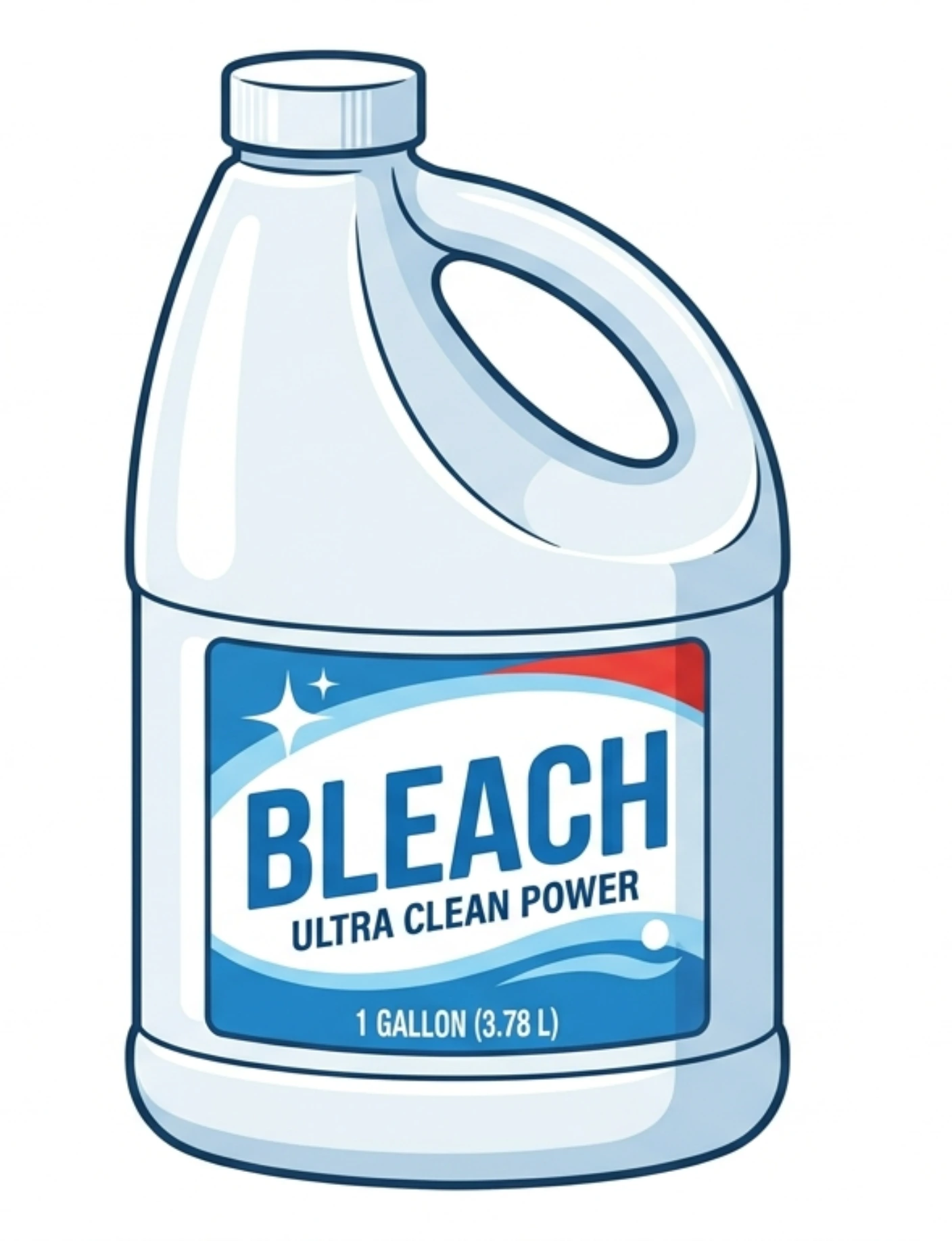
Bleach is your broad-spectrum option. Sporicidal, virucidal, bactericidal, fungicidal. When IPA is not enough, bleach is the answer. But it comes with tradeoffs.
What it is good at:
What it will not tolerate:
Working concentration: 0.5 to 1% sodium hypochlorite (roughly 1:10 dilution of household bleach) for general surface disinfection. 10% for waste decontamination.
Contact time: 10 to 30 minutes for full sporicidal activity. Spray and walk away.
The shelf life problem nobody talks about: Bleach is stable as a concentrate. Undiluted household bleach holds for 6 months to a year from manufacture. The moment you dilute it, the clock starts ticking. Free available chlorine degrades quickly in dilute solution, especially when exposed to light, opened repeatedly, or stored warm. Best practice is to make fresh diluted bleach daily or at minimum weekly. Six weeks is the researched outer limit under real-world lab conditions. After that, do not assume it still has adequate activity. Store bleach as concentrate and make a new solution as needed. When in doubt, make a new solution.
Does brand matter? Not much. What matters is the sodium hypochlorite concentration on the label. Household bleach runs 5 to 6% sodium hypochlorite regardless of brand. Check the label, calculate your dilution from the actual concentration, and do not assume concentrated formulations are the same ratio as standard ones. A store-brand 6% bleach diluted 1:10 gives you the same working solution as a name brand. Save the budget for things that actually differ between brands.
Neutralizing bleach residue: If you need to neutralize bleach after contact time on a surface, in waste, or before disposal, sodium thiosulfate is your tool. It rapidly reduces hypochlorite to chloride, stopping disinfectant activity without leaving harmful byproducts.
Quaternary Ammonium Compounds (Quats): The Forgotten Middle Child
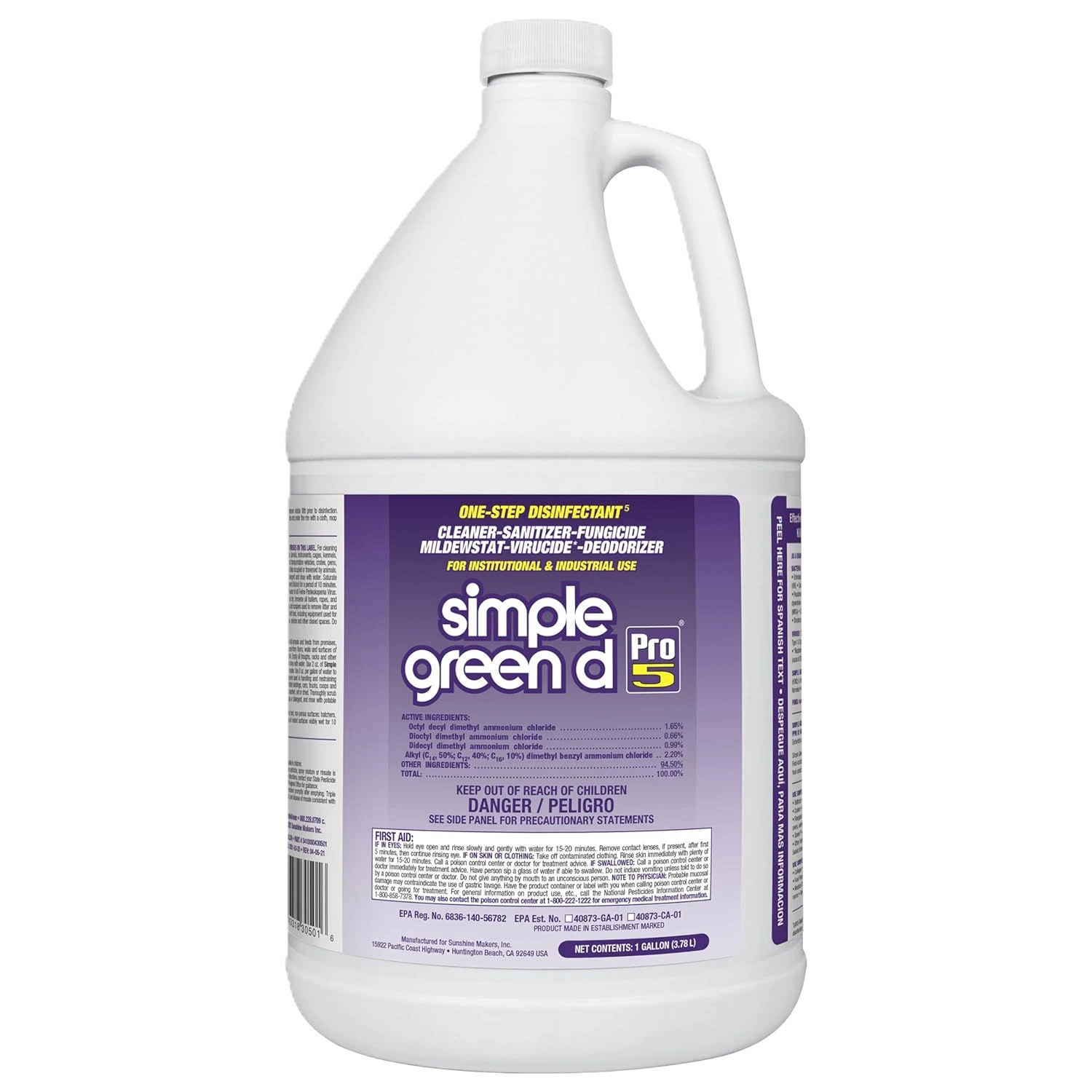
→ Simple Green d Pro 5 Disinfectant, 1 gal
Quats sit between IPA and bleach in spectrum and are worth knowing, especially as part of a rotation strategy (more on that below).
A good option is Simple Green d Pro 5 (30501), a concentrated EPA-registered hospital-grade disinfectant that also works as a cleaner, sanitizer, fungicide, and virucide. It kills MRSA, Staph, Strep, HIV-1, Hepatitis B and C, and a broad range of other pathogens, with no added color or fragrance — practical for BSC and incubator use.
What quats are good at:
What they miss:
- Broad spectrum: bacteria, fungi, non-enveloped viruses, mycobacteria
- Faster contact times than bleach for many organisms
- Breaks down into water and oxygen — no harsh residue
- Less corrosive than bleach
- Useful when bleach is not practical but you need more coverage than IPA provides
- Standard 3% household hydrogen peroxide is not the same as AHP formulations. Concentration and stabilization matter.
- Can bleach or damage some materials with repeated use
- Not sporicidal at standard use concentrations — high concentration or extended contact time is needed for spores
- Daily BSC wipedowns between cultures: 70% IPA
- Scheduled BSC deep clean: 5% dual quat followed by 70% ethanol
- Weekly general deep clean: quat-based or AHP disinfectant
- Monthly or after any spill or concern: bleach
- Contact time is not optional. If the surface dries before the listed contact time, you did not disinfect it. You moistened it.
- Clean before you disinfect. Organic material (media, serum, cell debris) neutralizes disinfectants. Wipe visible contamination first.
- Rotate between disinfectant classes. Using the same product exclusively creates selection pressure. Mix it up deliberately.
- Store bleach as concentrate, make fresh solution as needed. Daily or weekly preparation is best practice. Six weeks is the outer limit. When in doubt, make a new solution.
- Do not top off spray or squeeze bottles. Always empty the bottle completely before refilling. Repeatedly topping off allows microorganisms to accumulate in residual solution over time.
- Check concentrations, not brand names. What is on the label matters more than what is on the bottle.
- Read the label for your specific product. Concentration and contact time vary between formulations.
Where they shine: Equipment surfaces that get disinfected repeatedly. Incubator interiors. Anywhere you want residual activity between cleanings or bleach corrosion is a concern.
The catch: Hard water and organic load can significantly reduce quat activity. Some bacterial species (Pseudomonas in particular) have developed reduced susceptibility with repeated exposure. This is exactly why rotation matters.
Using quats in the biosafety cabinet: For a thorough BSC decontamination, the recommended approach is to spray the entire interior of the cabinet including the sash with a 5% dual quaternary ammonium solution, wipe down with paper towels, then follow up with 70% ethanol to remove the tacky residue the quat leaves behind. The ethanol step is what makes this practical. Without it, quat residue on work surfaces can interfere with cell culture reagents. For quick wipedowns between cultures, IPA alone is fine. Reserve the two-step protocol for your scheduled deep cleans.
Hydrogen Peroxide: The Underused Option
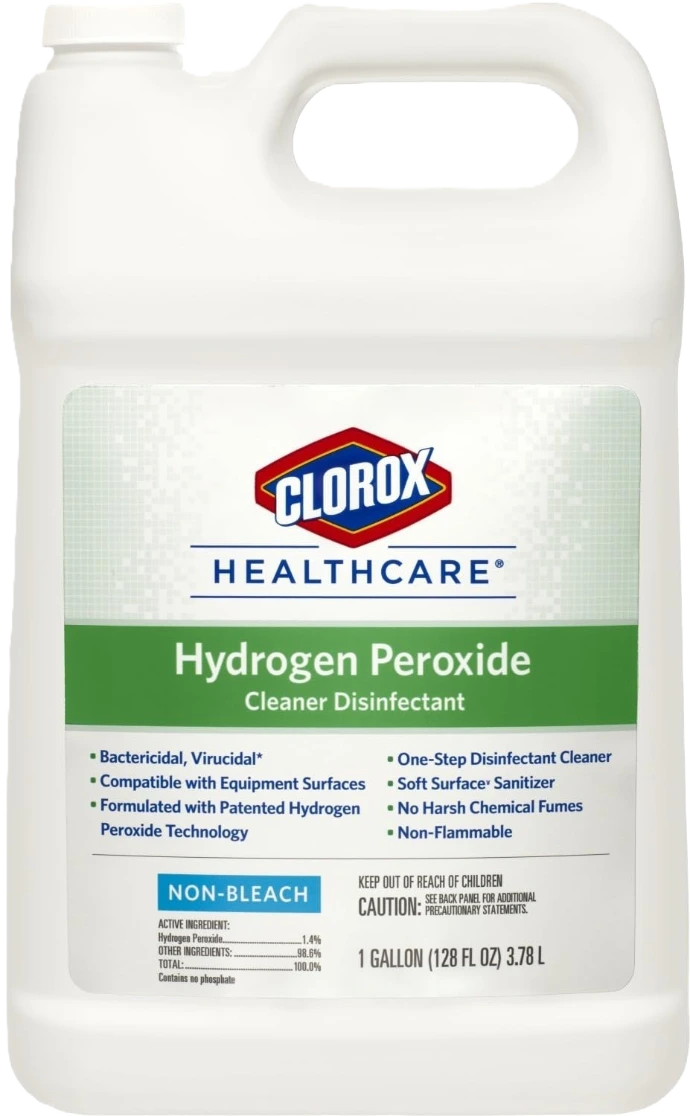
→ Clorox Healthcare Hydrogen Peroxide Cleaner Disinfectant, 1 gal
Accelerated hydrogen peroxide (AHP) products deserve more attention in cell culture and BSL-2 labs. Products like Clorox Healthcare Hydrogen Peroxide Cleaner Disinfectant use a stabilized low-concentration hydrogen peroxide formula that is effective against a broad range of pathogens, including non-enveloped viruses and mycobacteria, with shorter contact times than bleach.
What it is good at:
What to watch for:
Where it fits in your rotation: AHP products are a practical middle ground between IPA and bleach. They are a good option for surface disinfection when you need broader spectrum coverage than IPA but want to avoid bleach corrosion or residue concerns.
Rotate Your Disinfectants — This Is Not Optional
Here is the rule most labs ignore: do not use the same disinfectant exclusively, indefinitely.
Bacteria can develop reduced susceptibility to disinfectants with repeated exposure, particularly quats. Rotating between chemically distinct disinfectant classes reduces the selective pressure that allows tolerant strains to emerge and dominate your lab environment. Think antibiotic stewardship, but for your biosafety cabinet.
A practical rotation:
Adjust based on what you are working with, but the principle is simple. Vary the mechanism of action so no single organism gets comfortable.
The Decision Framework: Which One, When
| Situation | Reach For |
|---|---|
| Quick BSC wipedown between cultures | 70% IPA |
| Scheduled BSC deep clean | 5% dual quat, then 70% ethanol |
| After working with a spore-forming organism | Bleach |
| BSL-2 liquid waste before disposal | 10% bleach, 30 min contact |
| Spill of biological material | Bleach (clean first, then disinfect) |
| Incubator routine cleaning | Quat or AHP |
| Non-enveloped virus work | Bleach or AHP |
| General bench decontamination | 70% IPA (allow contact time) |
| Equipment that cannot handle bleach corrosion | Quat or AHP |
| Neutralizing bleach residue post-contact | Sodium thiosulfate |