- All products
- PCR
- 96-well PCR Plates, Non-Skirted
- PCR
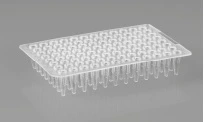
Non-skirted 96-well polypropylene qPCR plates in 0.1 mL and 0.2 mL well volumes — engineered for standard thermal cyclers and qPCR instruments that accept unskirted plate formats. Available in clear and white well color with a choice of black printed or molded alphanumeric plate markings. Non-sterile. Certified DNase/RNase-free and endotoxin-free. 10 plates per box, 100 plates per case.
The non-skirted format provides maximum flexibility across a broad range of thermal cycler models. Ultra-thin well walls ensure optimal and uniform heat transfer for consistent thermal cycling performance across all 96 wells. Each well features raised rims to facilitate secure sealing with pressure-sensitive films, adhesive seals, and heat-sealing technologies. The seal between the tube opening and cap is critical — our tube design and wall thickness are optimized to provide the perfect seal, minimizing evaporation without causing spillage on opening.
- Non-skirted format — maximum thermal cycler compatibility across a broad range of instruments that accept unskirted 96-well plate formats
- Two well volumes — 0.1 mL for instruments with 0.1 mL block format (e.g. QuantStudio 7) and 0.2 mL for standard thermal cyclers
- Clear wells — transparent polypropylene wells for visual sample inspection and compatibility with SYBR Green and probe-based detection
- White wells — white well walls reflect emitted fluorescence toward the detector, improving signal sensitivity in low-template and probe-based qPCR applications
- Black print labeling — high-contrast alphanumeric row and column identifiers printed on the plate frame for clear well identification
- Molded labeling — permanently formed alphanumeric identifiers that cannot fade, wear off, or be obscured by reagents or handling
- Ultra-thin well walls — ensure optimal and uniform heat transfer across all 96 wells for consistent thermal cycling performance
- Raised well rims — facilitate secure sealing across multiple sealing methods including pressure-sensitive films, adhesive seals, and heat-sealing technologies
- Optimized seal design — tube wall thickness engineered to provide the perfect seal — minimizing evaporation without causing spillage on opening
- DNase/RNase-free and endotoxin-free — certified for sensitive nucleic acid applications
- Alphanumeric plate markings — standard A–H row and 1–12 column identification on all plates
| Specification | Detail |
|---|---|
| Material | Polypropylene |
| Well Count | 96 wells |
| Skirt Style | Non-skirted (unskirted) |
| Well Volumes | 0.1 mL | 0.2 mL |
| Well Color Options | Clear | White |
| Plate Labeling | Black print | Molded |
| Plate Markings | Alphanumeric — A–H rows, 1–12 columns |
| Sealing Compatibility | Pressure-sensitive films | Adhesive seals | Heat-sealing |
| Sterile | ⚠️ Non-Sterile |
| DNase / RNase-free | ✓ Certified |
| Endotoxin-free | ✓ Certified |
| Packaging | 10 plates per box | 100 plates per case |
- Store in original packaging in a clean, dry environment away from direct sunlight and UV exposure
- Maintain storage temperature between 15°C and 30°C prior to use
- Handle plates by the edges to avoid contaminating well surfaces with skin oils and RNases
- Use powder-free gloves when handling plates for sensitive RNA applications
- Load samples using a multichannel pipette or automated liquid handler to maintain well-to-well consistency
- Seal plates immediately after sample loading to prevent evaporation — verify seal integrity before placing in the thermal cycler
- Centrifuge briefly at low speed after sealing to collect sample at the well base and remove air bubbles
- Ensure plate is correctly oriented in the thermal cycler block — verify plate sits flat with no rocking before starting the run
- Dispose of used plates per your institution's biosafety and waste disposal guidelines
Non-skirted 96-well polypropylene qPCR plates in 0.1 mL and 0.2 mL well volumes — engineered for standard thermal cyclers and qPCR instruments that accept unskirted plate formats. Available in clear and white well color with a choice of black printed or molded alphanumeric plate markings. Non-sterile. Certified DNase/RNase-free and endotoxin-free. 10 plates per box, 100 plates per case.
The non-skirted format provides maximum flexibility across a broad range of thermal cycler models. Ultra-thin well walls ensure optimal and uniform heat transfer for consistent thermal cycling performance across all 96 wells. Each well features raised rims to facilitate secure sealing with pressure-sensitive films, adhesive seals, and heat-sealing technologies. The seal between the tube opening and cap is critical — our tube design and wall thickness are optimized to provide the perfect seal, minimizing evaporation without causing spillage on opening.
- Non-skirted format — maximum thermal cycler compatibility across a broad range of instruments that accept unskirted 96-well plate formats
- Two well volumes — 0.1 mL for instruments with 0.1 mL block format (e.g. QuantStudio 7) and 0.2 mL for standard thermal cyclers
- Clear wells — transparent polypropylene wells for visual sample inspection and compatibility with SYBR Green and probe-based detection
- White wells — white well walls reflect emitted fluorescence toward the detector, improving signal sensitivity in low-template and probe-based qPCR applications
- Black print labeling — high-contrast alphanumeric row and column identifiers printed on the plate frame for clear well identification
- Molded labeling — permanently formed alphanumeric identifiers that cannot fade, wear off, or be obscured by reagents or handling
- Ultra-thin well walls — ensure optimal and uniform heat transfer across all 96 wells for consistent thermal cycling performance
- Raised well rims — facilitate secure sealing across multiple sealing methods including pressure-sensitive films, adhesive seals, and heat-sealing technologies
- Optimized seal design — tube wall thickness engineered to provide the perfect seal — minimizing evaporation without causing spillage on opening
- DNase/RNase-free and endotoxin-free — certified for sensitive nucleic acid applications
- Alphanumeric plate markings — standard A–H row and 1–12 column identification on all plates
| Specification | Detail |
|---|---|
| Material | Polypropylene |
| Well Count | 96 wells |
| Skirt Style | Non-skirted (unskirted) |
| Well Volumes | 0.1 mL | 0.2 mL |
| Well Color Options | Clear | White |
| Plate Labeling | Black print | Molded |
| Plate Markings | Alphanumeric — A–H rows, 1–12 columns |
| Sealing Compatibility | Pressure-sensitive films | Adhesive seals | Heat-sealing |
| Sterile | ⚠️ Non-Sterile |
| DNase / RNase-free | ✓ Certified |
| Endotoxin-free | ✓ Certified |
| Packaging | 10 plates per box | 100 plates per case |
- Store in original packaging in a clean, dry environment away from direct sunlight and UV exposure
- Maintain storage temperature between 15°C and 30°C prior to use
- Handle plates by the edges to avoid contaminating well surfaces with skin oils and RNases
- Use powder-free gloves when handling plates for sensitive RNA applications
- Load samples using a multichannel pipette or automated liquid handler to maintain well-to-well consistency
- Seal plates immediately after sample loading to prevent evaporation — verify seal integrity before placing in the thermal cycler
- Centrifuge briefly at low speed after sealing to collect sample at the well base and remove air bubbles
- Ensure plate is correctly oriented in the thermal cycler block — verify plate sits flat with no rocking before starting the run
- Dispose of used plates per your institution's biosafety and waste disposal guidelines
Frequently Bought Together
These other products might interest you