- All products
- Cell Lines
- Human Adipose-Derived Mesenchymal Stem Cell (MSC), Conditionally Immortalized
- Cell Lines
Internal Reference:
KCL-MSC-801
⚠ FOR RESEARCH USE ONLY — Not for diagnostic or therapeutic procedures
The Conditionally Immortalized Human Adipose-Derived Mesenchymal Stem Cell (HAdM1) line was generated by lentiviral infection of primary HAdMSCs with an SV40 Large T antigen under a Tet-On inducible expression system. Cells were selected using puromycin resistance to ensure stable integration. The resulting line retains key MSC characteristics while providing extended proliferative capacity for research applications.
Cells are isolated from lipoaspirate derived from white adipose tissue and display a characteristic spindle-shaped, fibroblast-like morphology. This line is suitable for mechanistic studies of MSC biology, adipogenic and osteogenic differentiation research, and applications where consistent, long-term cell availability is required.
Kulture Scientific HAdM1 cells are quality-tested prior to release for surface marker expression, viability, and freedom from mycoplasma and common viral contaminants.
Mesenchymal Stem Cell Growth Medium (MSCGM). See the Related Products tab for compatible reagents and media available from Kulture Scientific.
All lots are quality tested prior to release. The following characterization data is generated for each production lot.
| Marker | Result | Threshold |
|---|---|---|
| CD29 | ✓ Positive | >95% by flow cytometry |
| CD44 | ✓ Positive | >95% by flow cytometry |
| CD73 | ✓ Positive | >95% by flow cytometry |
| CD90 | ✓ Positive | >95% by flow cytometry |
| CD105 | ✓ Positive | >95% by flow cytometry |
| CD166 | ✓ Positive | >95% by flow cytometry |
| CD14 | ✗ Negative | <2% |
| CD31 | ✗ Negative | <2% |
| CD34 | ✗ Negative | <2% |
| CD45 | ✗ Negative | <2% |
| Test | Result |
|---|---|
| Mycoplasma | ✗ Negative |
| HIV-1 | ✗ Negative |
| HBV (Hepatitis B Virus) | ✗ Negative |
| HCV (Hepatitis C Virus) | ✗ Negative |
Certificates of Analysis with complete QC data are available upon request. Contact Kulture Scientific with your lot number to obtain documentation.
Follow the appropriate protocol based on the format in which your cells were shipped. Do not deviate from these instructions — improper handling upon receipt will compromise cell viability.
Detailed protocols for subculturing, passaging, and cryopreservation are available on the Kulture Scientific protocol page. The recommended culture medium is Mesenchymal Stem Cell Growth Medium (MSCGM). See Related Products for compatible Kulture detachment and coating solutions.
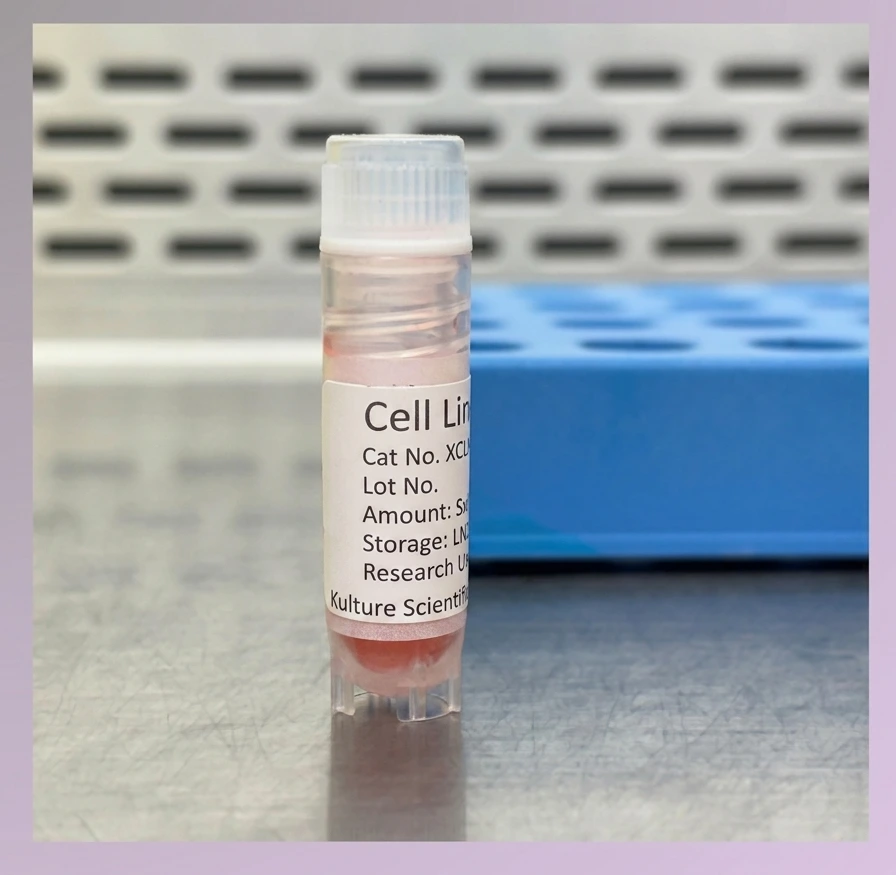
HAdM1 cells are available as a frozen vial or as a proliferating culture in a T-25 flask. Select the format that best suits your experimental timeline.
| Product | Cat. No. | Format | Cell Number |
|---|---|---|---|
| Conditionally Immortalized Human Adipose-Derived MSC | CL-HAdM1 | Frozen Vial | >5×10⁵ cells/vial |
| Conditionally Immortalized Human Adipose-Derived MSC | CL-HAdM1-F | T-25 Flask | >90% confluent |
- Storage — store in liquid nitrogen vapor phase (−150°C to −196°C); this is the only recommended storage condition for cryopreserved cells
- Do not store at −80°C or −20°C — neither temperature is suitable for long-term cell storage; viability will be compromised
- Temperature sensitivity — cells are sensitive to temperature fluctuations; minimize time outside cryogenic storage
- Freeze-thaw cycles — repeated freeze-thaw cycles will compromise cell viability and are not recommended; thaw only what is needed for immediate use
- Stability — cells stored in liquid nitrogen are stable indefinitely when maintained under correct cryogenic conditions
- Shipping condition — frozen vials are shipped on dry ice; T-25 flasks are shipped at ambient temperature and should be processed immediately upon receipt
- Certificate of Analysis — lot-specific QC results including viability, sterility, and characterization data are available upon request
For research purposes only. Not for use in diagnostic or therapeutic procedures. This product has not been tested or validated for clinical use.
This cell line should be handled under Biosafety Level 2 (BSL-2) conditions. BSL-2 is required based on the following characteristics of this product:
- Human-derived origin — all human-derived cell lines require BSL-2 containment under Universal Precautions regardless of donor screening status
- Lentiviral transduction history — the line was generated using lentiviral vectors; replication-incompetent lentivirally transduced lines are classified as BSL-2 by most institutional biosafety committees
- SV40 Large T antigen expression — expression of an oncogenic element requires appropriate containment
Users must consult their institutional biosafety committee (IBC) prior to use. Individual institutions may impose additional requirements based on local policy.
- Human-derived material — treat as potentially infectious; follow your institutional BSL-2 guidelines for handling human-derived primary cells and cell lines
- Lentiviral transduction — this cell line was generated using lentiviral infection; handle in accordance with your institutional biosafety committee (IBC) guidelines for lentivirally transduced cell lines
- DMSO (cryoprotectant) — cryopreserved vials contain DMSO, which is a skin-penetrating agent; wear nitrile gloves and avoid contact with skin during thawing procedures
- Disposal — decontaminate all cell culture waste with an appropriate disinfectant (e.g., 10% bleach) prior to disposal in accordance with local biohazardous waste regulations
⚠ FOR RESEARCH USE ONLY — Not for diagnostic or therapeutic procedures
The Conditionally Immortalized Human Adipose-Derived Mesenchymal Stem Cell (HAdM1) line was generated by lentiviral infection of primary HAdMSCs with an SV40 Large T antigen under a Tet-On inducible expression system. Cells were selected using puromycin resistance to ensure stable integration. The resulting line retains key MSC characteristics while providing extended proliferative capacity for research applications.
Cells are isolated from lipoaspirate derived from white adipose tissue and display a characteristic spindle-shaped, fibroblast-like morphology. This line is suitable for mechanistic studies of MSC biology, adipogenic and osteogenic differentiation research, and applications where consistent, long-term cell availability is required.
Kulture Scientific HAdM1 cells are quality-tested prior to release for surface marker expression, viability, and freedom from mycoplasma and common viral contaminants.
Mesenchymal Stem Cell Growth Medium (MSCGM). See the Related Products tab for compatible reagents and media available from Kulture Scientific.
All lots are quality tested prior to release. The following characterization data is generated for each production lot.
| Marker | Result | Threshold |
|---|---|---|
| CD29 | ✓ Positive | >95% by flow cytometry |
| CD44 | ✓ Positive | >95% by flow cytometry |
| CD73 | ✓ Positive | >95% by flow cytometry |
| CD90 | ✓ Positive | >95% by flow cytometry |
| CD105 | ✓ Positive | >95% by flow cytometry |
| CD166 | ✓ Positive | >95% by flow cytometry |
| CD14 | ✗ Negative | <2% |
| CD31 | ✗ Negative | <2% |
| CD34 | ✗ Negative | <2% |
| CD45 | ✗ Negative | <2% |
| Test | Result |
|---|---|
| Mycoplasma | ✗ Negative |
| HIV-1 | ✗ Negative |
| HBV (Hepatitis B Virus) | ✗ Negative |
| HCV (Hepatitis C Virus) | ✗ Negative |
Certificates of Analysis with complete QC data are available upon request. Contact Kulture Scientific with your lot number to obtain documentation.
Follow the appropriate protocol based on the format in which your cells were shipped. Do not deviate from these instructions — improper handling upon receipt will compromise cell viability.
Detailed protocols for subculturing, passaging, and cryopreservation are available on the Kulture Scientific protocol page. The recommended culture medium is Mesenchymal Stem Cell Growth Medium (MSCGM). See Related Products for compatible Kulture detachment and coating solutions.
HAdM1 cells are available as a frozen vial or as a proliferating culture in a T-25 flask. Select the format that best suits your experimental timeline.
| Product | Cat. No. | Format | Cell Number |
|---|---|---|---|
| Conditionally Immortalized Human Adipose-Derived MSC | CL-HAdM1 | Frozen Vial | >5×10⁵ cells/vial |
| Conditionally Immortalized Human Adipose-Derived MSC | CL-HAdM1-F | T-25 Flask | >90% confluent |
- Storage — store in liquid nitrogen vapor phase (−150°C to −196°C); this is the only recommended storage condition for cryopreserved cells
- Do not store at −80°C or −20°C — neither temperature is suitable for long-term cell storage; viability will be compromised
- Temperature sensitivity — cells are sensitive to temperature fluctuations; minimize time outside cryogenic storage
- Freeze-thaw cycles — repeated freeze-thaw cycles will compromise cell viability and are not recommended; thaw only what is needed for immediate use
- Stability — cells stored in liquid nitrogen are stable indefinitely when maintained under correct cryogenic conditions
- Shipping condition — frozen vials are shipped on dry ice; T-25 flasks are shipped at ambient temperature and should be processed immediately upon receipt
- Certificate of Analysis — lot-specific QC results including viability, sterility, and characterization data are available upon request
For research purposes only. Not for use in diagnostic or therapeutic procedures. This product has not been tested or validated for clinical use.
This cell line should be handled under Biosafety Level 2 (BSL-2) conditions. BSL-2 is required based on the following characteristics of this product:
- Human-derived origin — all human-derived cell lines require BSL-2 containment under Universal Precautions regardless of donor screening status
- Lentiviral transduction history — the line was generated using lentiviral vectors; replication-incompetent lentivirally transduced lines are classified as BSL-2 by most institutional biosafety committees
- SV40 Large T antigen expression — expression of an oncogenic element requires appropriate containment
Users must consult their institutional biosafety committee (IBC) prior to use. Individual institutions may impose additional requirements based on local policy.
- Human-derived material — treat as potentially infectious; follow your institutional BSL-2 guidelines for handling human-derived primary cells and cell lines
- Lentiviral transduction — this cell line was generated using lentiviral infection; handle in accordance with your institutional biosafety committee (IBC) guidelines for lentivirally transduced cell lines
- DMSO (cryoprotectant) — cryopreserved vials contain DMSO, which is a skin-penetrating agent; wear nitrile gloves and avoid contact with skin during thawing procedures
- Disposal — decontaminate all cell culture waste with an appropriate disinfectant (e.g., 10% bleach) prior to disposal in accordance with local biohazardous waste regulations
Frequently Bought Together
These other products might interest you