
Key Takeaways
- FBS prices swung 45% in 2025 alone and the structural reasons behind it are not going away.
- Blended serum is not the problem. Undisclosed blending is. And in a tight market, the incentive to cut corners without saying so is growing.
- Researchers who depend on FBS for clinical-grade cell therapy production face a specific and serious supply risk that routine research labs do not.
- Switching supplements does not create a reproducibility problem. It makes you confront one that was already there.
- Donor-derived bovine platelet lysate is worth a look. Not because it is new and exciting, but because the supply logic is fundamentally different.
The Conversation Nobody Is Having Out Loud
It shows up in budget meetings. In the gap between what got ordered last year and what landed on the invoice this year. In the researcher who quietly drops their FBS concentration from 10% to 8% hoping nobody runs the numbers.
FBS has always been expensive relative to what it is. A biological byproduct. Blood, essentially, collected at slaughter, processed, filtered, and frozen. What has changed is the gap between expensive and prohibitive. For a lot of labs, that gap is closing fast.
The U.S. cattle herd is at its lowest point since 1951. Drought across major cattle-producing regions has pushed ranchers to reduce herd sizes rather than absorb feed costs that stopped making financial sense years ago. And here is the part the supplier emails leave out: at current cattle prices, it often does not make economic sense to slaughter a pregnant cow. A live calf is worth more than the serum. So pregnant cows are not going to slaughter at the rate they used to. Fewer fetuses. Less serum. Higher prices.
New World screwworm was confirmed in Texas cattle in June 2026 for the first time in decades. Another variable. Another pressure on a herd that was already under stress.
FBS prices swung 45% in 2025 alone. That is not normal market volatility. That is a supply chain telling you something.
What Happens When a Commodity Gets Scarce
When supply tightens and prices spike, something predictable happens: the market gets creative.
Blended serum is not inherently a problem. Mixing fetal fractions with newborn calf or adult bovine serum, or combining serum from different geographic origins, is a legitimate manufacturing practice. The problem is when it is sold as something it is not.
This is documented. Not industry rumor. Peer-reviewed literature. South American serum rebranded as Australian origin. Fetal serum blended with cheaper fractions and sold at fetal serum prices. The International Serum Industry Association was formed specifically in response to these incidents.
Why does it matter? One word: reproducibility.
FBS is already chemically undefined. Every lot varies. Results generated on one lot are only truly comparable to results generated on that same lot. When that lot runs out, it is gone. You can buy the next one from the same supplier, run your qualification assay, call it equivalent, and move on. Most labs do exactly that.
But if the composition of what you are buying has quietly shifted because a supplier made an undisclosed blending decision to hit a price point in a tight market, your qualification assay may not catch it. Your cells will eventually tell you something is off. By then you may have months of data you cannot fully trust.
You could do independent verification testing. IgG levels, gamma-glutamyl transferase (GGT), total protein, elemental fingerprinting for geographic origin. These tests exist and they work.
Most researchers will not do them. The product is cheap, it works, and nobody has time. That is the honest reality of how labs operate. Which is exactly why undisclosed adulteration is such an effective fraud.
The Researchers Who Actually Cannot Afford to Ignore This
For most basic research labs, a bad lot of FBS is an expensive headache. For labs developing cell-based therapies, it is a different category of problem entirely.
If you are expanding mesenchymal stem cells, CAR-T cells, or any other cell type destined for clinical use, FBS is not just a growth supplement. It is a raw material in a regulated manufacturing process. Your process is validated against a specific FBS lot. Regulators expect you to control and characterize every input. Lot-to-lot variability in an undefined biological material is a genuine compliance risk, not an abstract one.
The labs in this position are already scrambling to secure supply. Some have locked in multi-year contracts. Some are holding inventory they cannot really afford to hold. And some are finally asking whether a donor-derived alternative with a more defined growth factor profile and a supply chain that does not depend on slaughter throughput might be worth the validation investment.
Switching supplements does not create a reproducibility problem. It makes you confront one that was already there.
The FBS Reproducibility Problem Was Always There
Here is the part that tends to make people uncomfortable.
FBS works because it is biologically complex, not because it is chemically defined. Cells find what they need in the mixture, whatever their specific requirements happen to be. It is the ultimate permissive supplement. A biological buffet.
The tradeoff is that you have never fully known what is in any given bottle. Two lots from the same supplier, same origin, same specification sheet, can perform differently enough to shift a sensitive assay. Most experienced researchers know this. We adjust. We pre-qualify lots in bulk. We run bridging studies when we change lots. We normalize the variability so thoroughly that we stop seeing it as a variable.
But it is a variable. It has always been a variable. And in a tight market where the incentive to cut corners increases, it becomes a less predictable one.
So What Are You Actually Supposed to Do
The honest answer is that there is no universal replacement for FBS. Anyone telling you otherwise is selling something.
Chemically defined, serum-free media are the right long-term direction for reproducibility and regulatory compliance. They are also expensive to develop and cell-type specific. If you have the resources and the runway to optimize, that investment pays off. Many labs do not have that right now.
Human platelet lysate has strong published data for MSC expansion and GMP manufacturing. For clinical applications, it makes real sense. It is also significantly more expensive than FBS, requires managing human bloodborne pathogen considerations at the bench, and introduces its own lot variability from donor pooling.
Donor-derived bovine platelet lysate sits in a different position. It is rich in growth factors. The supply model is donor-based rather than slaughter-based, which means it is structurally insulated from the cattle economics driving the current crisis. The biosafety picture at the bench is straightforward. The cost of goods is substantially lower than human-derived alternatives. And your cells have been growing in a bovine environment for decades.
What CHO Cells Think About It
We ran a head-to-head comparison in adherent CHO cells across three passages in duplicate.
Population doubling: FBS came in at 11.6, bovine platelet lysate at 11.1. Metabolic activity across 24, 48, and 72 hours showed no statistically significant difference (p > 0.05). Morphology at passage 3 was indistinguishable between conditions.
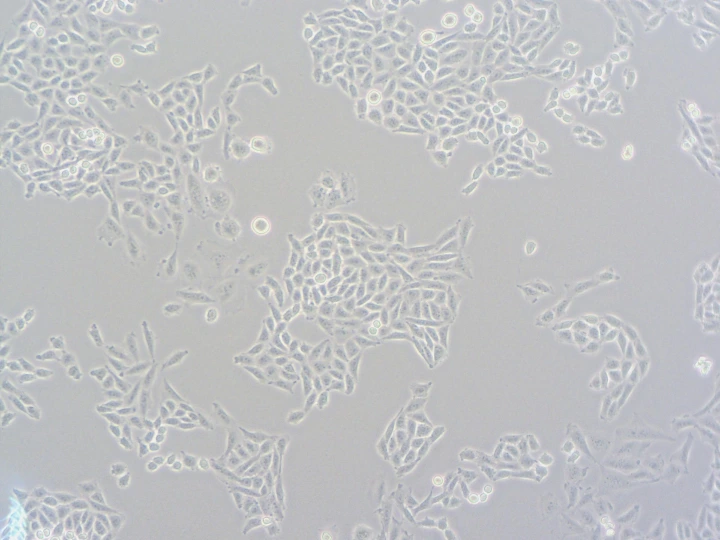
[FBS control, Passage 3, 10x phase]
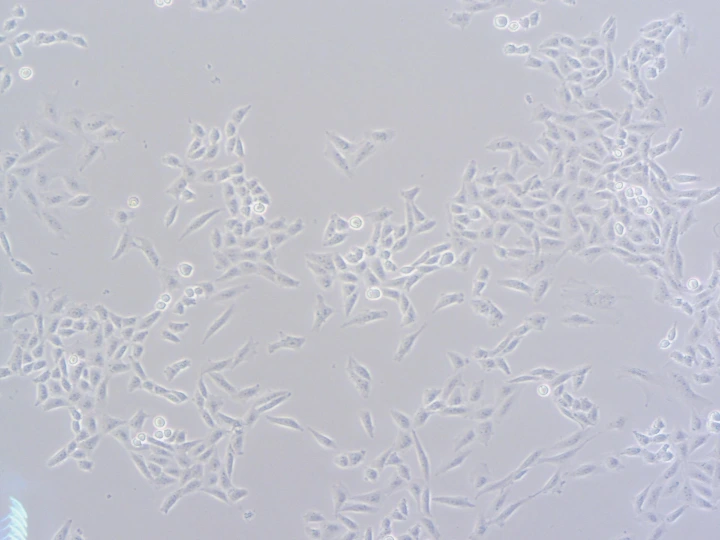
[Bovine platelet lysate, Passage 3, 10x phase]
This is preliminary data with small n and we are saying that clearly. More replicates are in progress. But the images invite a simple question: if you cannot see the difference, and the cells cannot tell the difference, what exactly are you protecting by staying with the more expensive, supply-constrained option?
The Bottom Line
Nobody got into research to manage a reagent supply chain. But here we are.
The FBS supply chain is fragile. It is downstream of cattle economics, drought cycles, disease pressure, and slaughter throughput across production regions that have no particular reason to prioritize your research timeline. You cannot fix any of those things.
But you can stop depending on them.
Not because there is a perfect alternative waiting. There is not one for every application. But because the assumption that FBS will always be available at a price you can afford is no longer a safe assumption. The labs that figure that out now, on their own terms, will be in a better position than the ones who figure it out when the backorder notice arrives.
Start Here
If FBS costs are genuinely affecting what research you can do, the most useful next step is running the experiment. Your cells, your assay, your readout. Not a generic growth curve. The thing you actually measure.
At Kulture Scientific we are building out donor-derived bovine platelet lysate for general research use. We are not ready to take your order yet. We are ready to have a real conversation about your specific application and whether what we are developing makes sense for it.
Reach out. If it is not the right fit, we will tell you that too.
Because the goal is not to sell you something. It is to help you stop depending on a system that is failing you.
Preliminary internal data, Kulture Scientific. Small-n study; additional validation ongoing. Sources: USDA NASS January 2026; USDA APHIS June 2026; Frontiers in Toxicology June 2025; BioProcess International; Emergen Research FBS Market 2025; peer-reviewed literature on serum adulteration (Gstraunthaler et al. 2013, 2014; Besser et al. 2018).